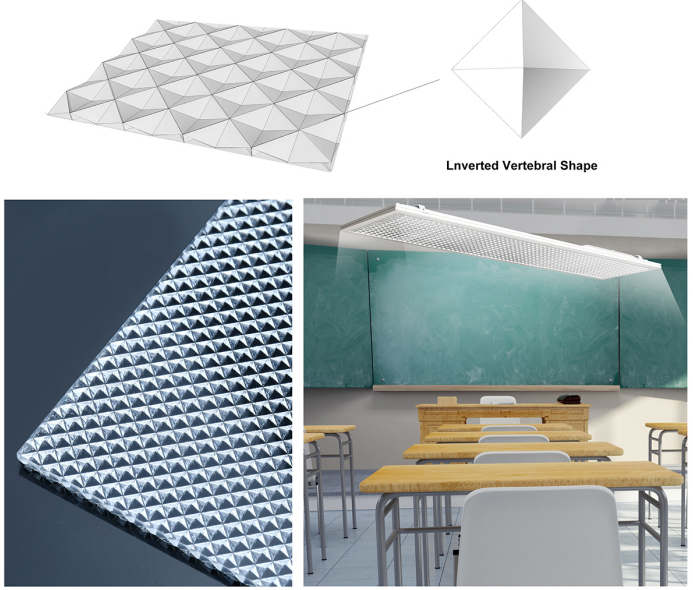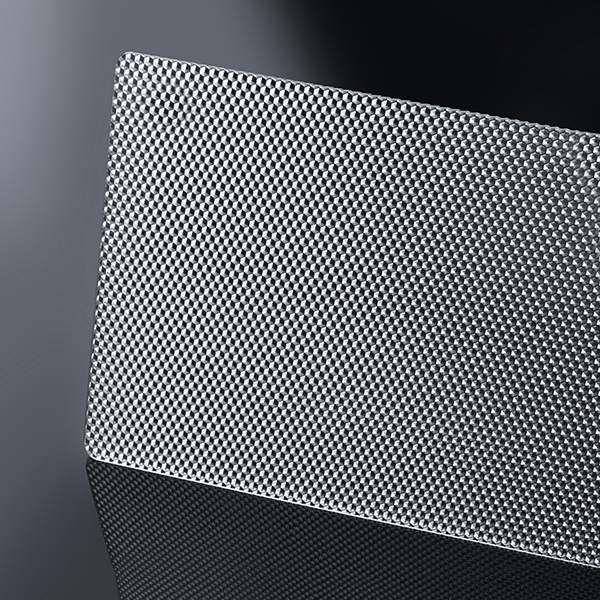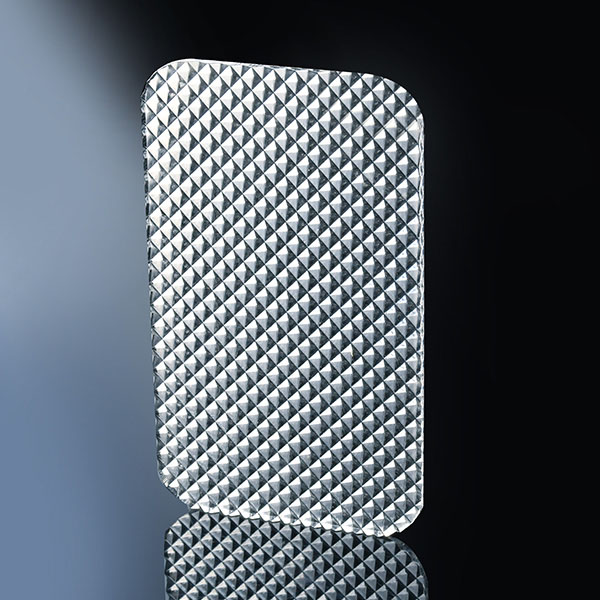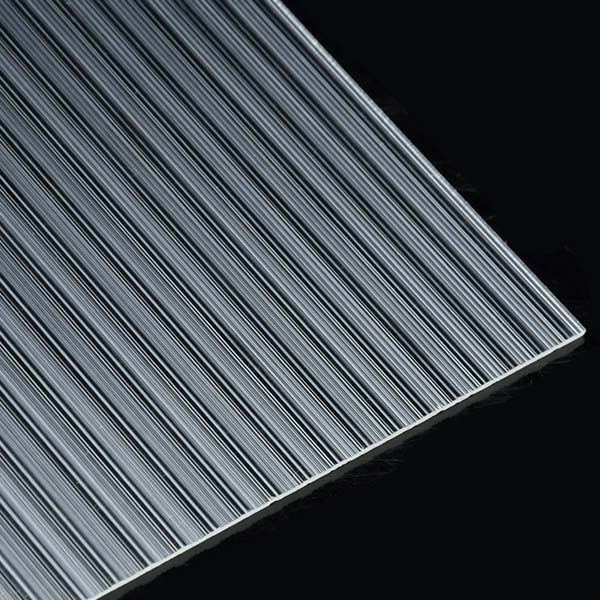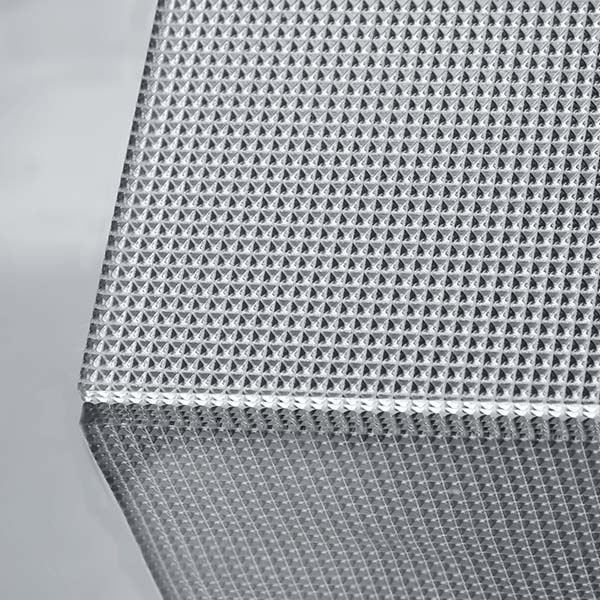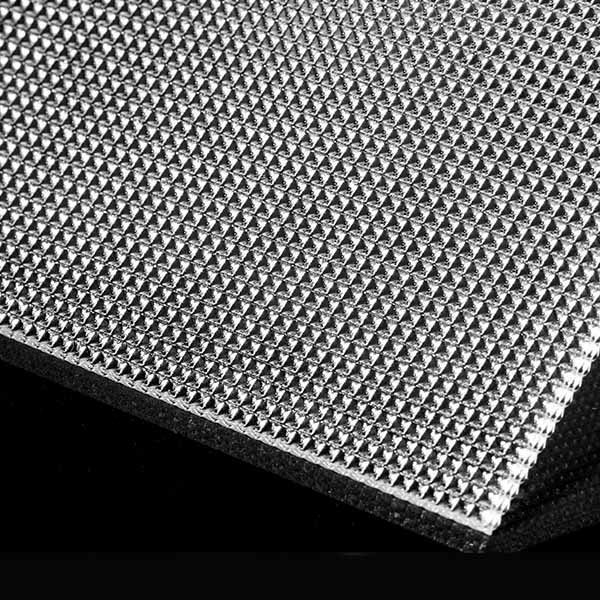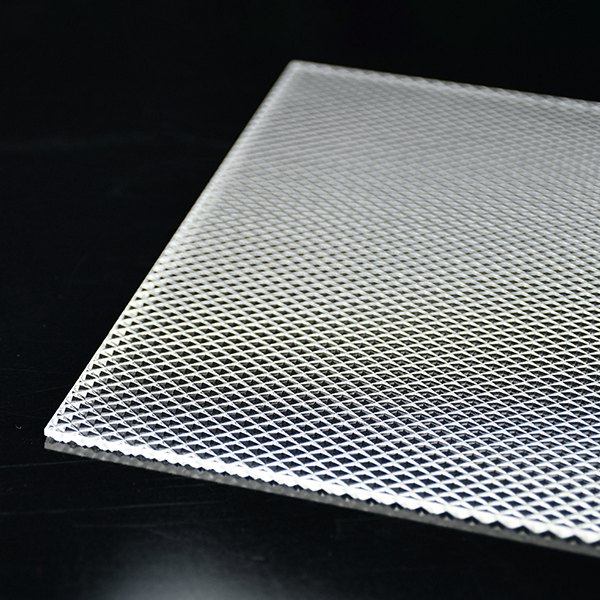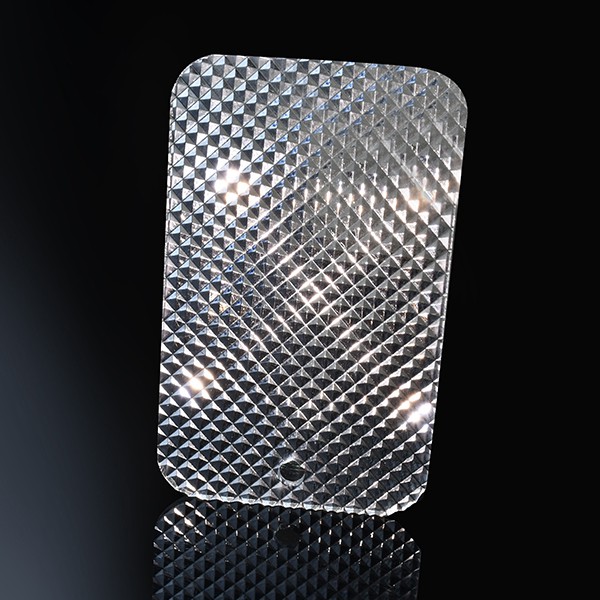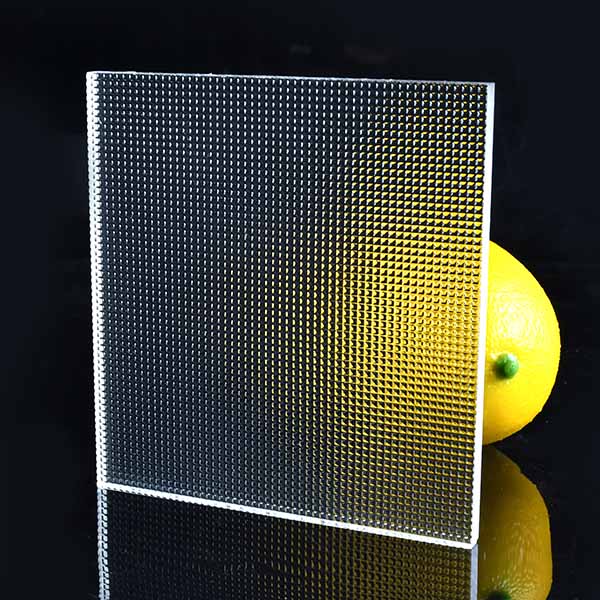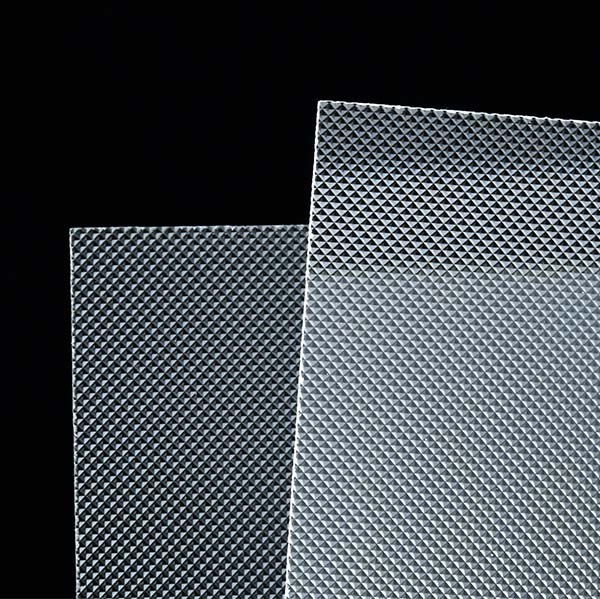
Pyramid Acrylic Plate JK-K16 is a precision-engineered optical acrylic panel designed to control and redistribute LED light through a scientifically aligned inverted pyramid structure. From the user’s perspective, it delivers a visually balanced lighting experience with controlled brightness and reduced visual strain. When light passes through the beveled pyramid surfaces, the perceived illumination becomes softer and more uniform, creating a stable and comfortable viewing environment. The panel maintains a clean and structured appearance, supporting consistent visual quality over long periods of use without noticeable glare fluctuation or brightness fatigue, making the lighting environment feel orderly and visually controlled
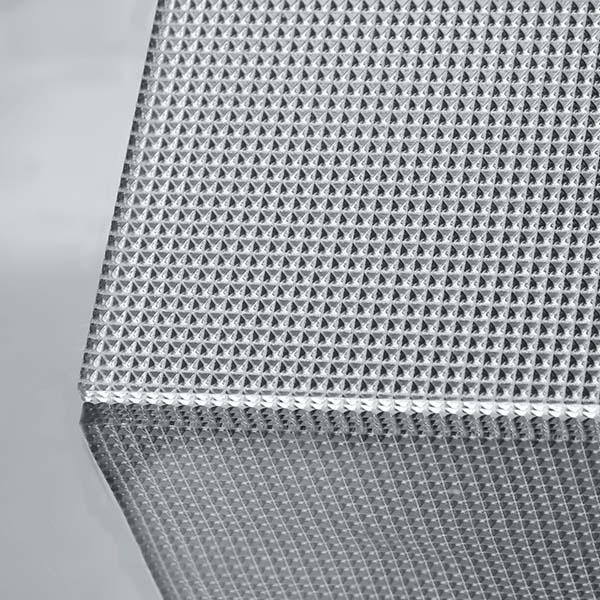
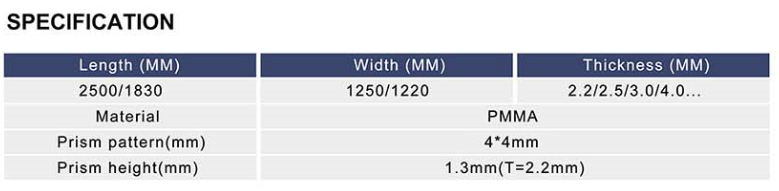
The panel uses a precisely aligned inverted pyramid array with a prism pattern size of 4 × 4 mm and a prism height of 1.3 mm at 2.2 mm thickness, enabling controlled refraction of incident LED light. This geometric configuration alters the original light angle in a predictable manner, ensuring stable light redirection across the entire surface. The uniform distribution of pyramids minimizes directional light concentration, allowing consistent optical behavior across large panel sizes up to 2500 × 1250 mm, which is critical for maintaining visual consistency in large-area lighting systems.
The optical structure is designed to achieve a Unified Glare Rating below 16, a threshold commonly required for visually demanding indoor environments. By dispersing high-intensity LED point sources through the inverted prism surfaces, the panel reduces peak luminance values perceived by the human eye. This glare control is achieved without sacrificing overall brightness, maintaining effective luminous output while limiting excessive contrast. The controlled glare level ensures compliance with professional lighting comfort standards used in educational and office environments.
Manufactured from PMMA acrylic, the panel provides high light transmission stability combined with internal diffusion generated by the pyramid structure. The material ensures consistent optical performance across thickness options including 2.2 mm, 2.5 mm, 3.0 mm, and 4.0 mm, allowing predictable uniformity regardless of panel specification. The structured surface prevents localized brightness hotspots, ensuring even luminance distribution across the entire plate, which is essential for maintaining visual consistency in extended lighting surfaces.
The acrylic plate is produced in standardized large formats of 2500 or 1830 mm length and 1250 or 1220 mm width, ensuring compatibility with mainstream LED panel systems. Tight dimensional tolerances support seamless integration into lighting fixtures without secondary trimming. This precision ensures optical alignment between the light source and prism structure, preventing light leakage or misalignment that could compromise glare control and luminance consistency.
The PMMA substrate combined with the inverted pyramid surface maintains structural integrity under standard lighting operating temperatures. Acrylic material stability ensures minimal deformation, preserving the 1.3 mm prism height accuracy over long-term use. This structural reliability guarantees that optical performance remains consistent throughout the product lifecycle, preventing degradation of glare control or light distribution caused by surface distortion.
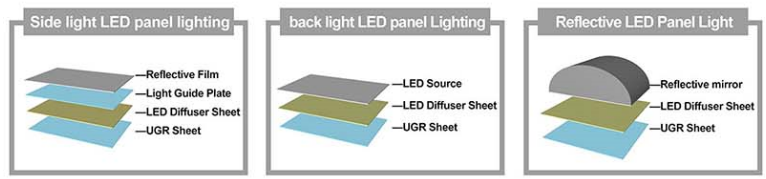
In LED panel lighting systems, this acrylic plate ensures consistent luminance distribution across large flat light surfaces. The inverted pyramid structure helps convert concentrated LED output into evenly diffused planar light, reducing localized brightness peaks. This is particularly effective in panels exceeding 1200 mm width, where uniformity is difficult to maintain without structured optical control. The controlled light redirection improves visual balance across the panel surface.
In classroom lighting environments, the panel supports prolonged visual focus by maintaining glare values below UGR 16, aligning with recommended standards for student learning spaces. The stable light distribution reduces eye fatigue during extended reading and writing sessions. The large panel dimensions allow coverage of wide classroom areas using fewer fixtures, ensuring consistent brightness across desks and instructional zones.
For blackboard illumination, the panel provides directional control that reduces reflected glare on writing surfaces. The inverted prism structure redirects light toward the board surface at controlled angles, improving text contrast visibility. This controlled lighting helps maintain legibility across the entire board width, even under high ambient lighting conditions, supporting clear visual communication during instruction.
In professional office environments, the acrylic plate contributes to balanced task lighting by limiting high-intensity glare from overhead LED sources. The optical structure supports uniform brightness across open-plan work areas, reducing screen reflections and contrast imbalance. This improves visual comfort for prolonged computer use while maintaining sufficient illuminance for desk tasks.
In training and seminar rooms, the panel ensures consistent lighting conditions across seating rows. The wide panel size and optical uniformity help avoid brightness variation between front and rear seating areas. This uniform lighting supports visual clarity for presentations, printed materials, and note-taking under controlled illumination conditions.
In library lighting systems, the plate delivers stable, low-glare illumination suitable for reading and reference activities. The reduced glare and uniform light distribution minimize eye strain during extended reading sessions. Large-format panels allow continuous lighting lines across shelves and reading zones, ensuring consistent visual conditions throughout the space.
In institutional buildings such as schools and public learning centers, the acrylic plate supports standardized lighting requirements through controlled glare and predictable optical performance. The PMMA construction and precise prism geometry ensure long-term stability and compliance with professional lighting specifications, making it suitable for large-scale installations requiring consistent visual quality.